
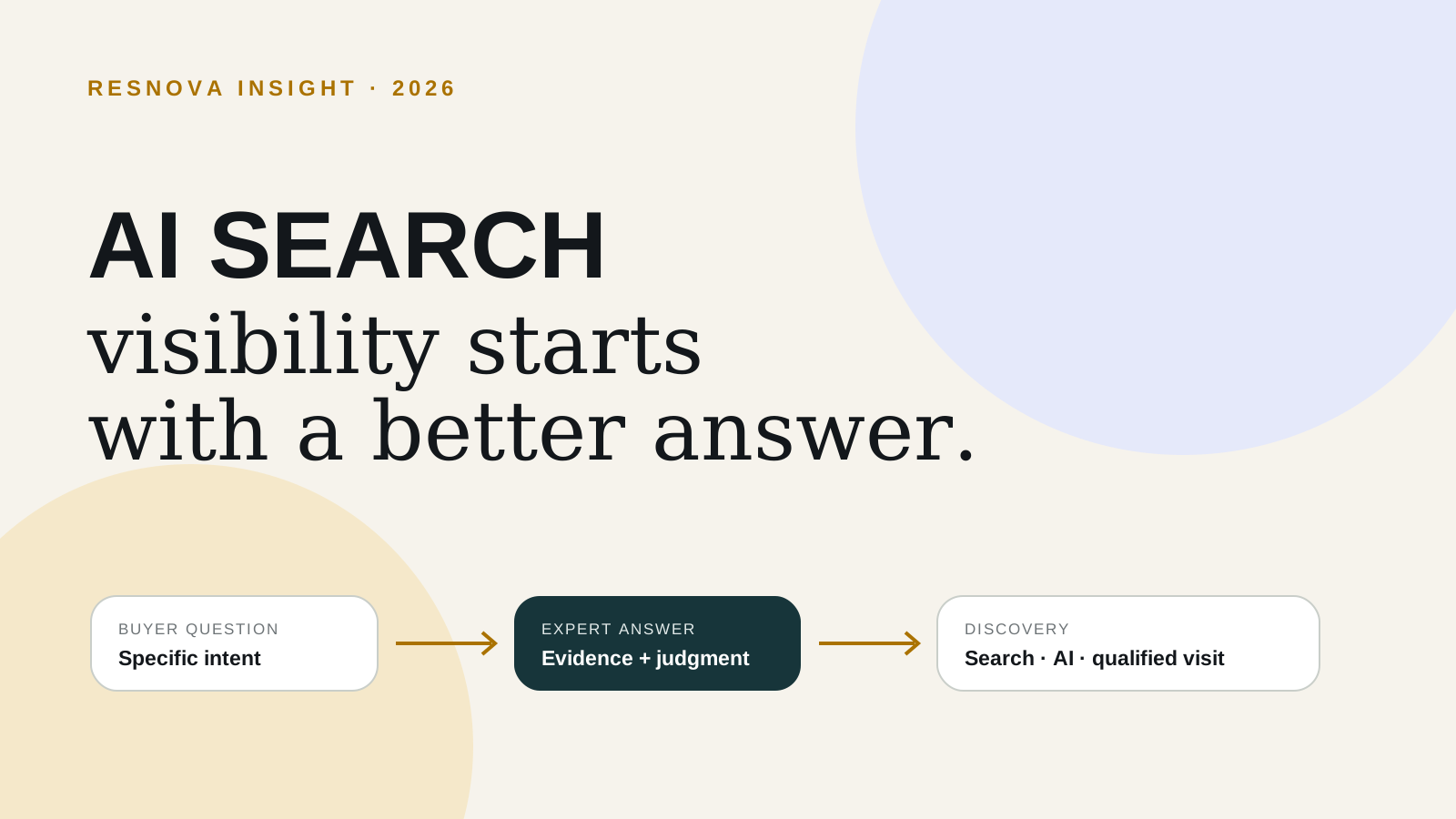
The short answer: Optimize for AI search by making the site easy to crawl, publishing specific expert answers, supporting claims with evidence, using clear page structure and measuring whether the content creates qualified discovery. Google says the same core SEO practices remain relevant to its generative search experiences. There is no separate technical trick that replaces useful content and a sound website.
Terms such as AEO and GEO describe a real change in how buyers discover information. They do not require a separate website strategy. The strongest approach connects search visibility, buyer education and conversion around the questions a qualified prospect is already asking.
Start with a question the business can answer better than a summary engine.
Generic articles are easy to reproduce and difficult to trust. Useful pages contain judgment that comes from doing the work: decision criteria, operating tradeoffs, examples, definitions, process detail and clear limits.
Instead of writing a broad page about marketing automation, answer a narrower question such as how an HVAC company should route after-hours leads or which CRM fields a dealership needs to connect a campaign to sold revenue.
Build one complete answer, then make it easy to extract.
Lead with the direct answer. Use descriptive headings, short sections, lists when they improve scanning and plain language. Define important terms in context. Each page should stand on its own while linking to the service, case study or related guide that gives the topic business context.
Choose a real buyer decision.
Add expertise, sources and limits.
Make the answer easy to understand.
Connect discovery to a useful next step.
Keep the technical foundation boring and reliable.
Important pages must be crawlable, indexable, internally linked and served with accurate titles, descriptions, canonicals and structured data. Images and video should support the subject rather than decorate empty space. Structured data must describe content that is visible on the page.
Google's current guidance does not require new AI-specific markup or an llms.txt file for ranking. A clean sitemap and technically sound site still matter because an answer cannot be selected if the system cannot reliably discover and understand the page.
Show why the answer deserves trust.
Name the authoring organization, cite primary sources, update material when platforms or policies change and distinguish facts from interpretation. If an example is illustrative, label it. If a result belongs to a client engagement, provide enough context to understand what changed without presenting one outcome as a universal promise.
Create topic depth around commercial decisions.
A strong content library should cover the questions that appear before, during and after a buying decision. One page may explain when to hire a Fractional CMO. Related pages can address what the role owns, how the first 90 days work and how leadership should measure the engagement.
This creates a connected body of expertise instead of a collection of keyword pages.
Measure discovery and business movement.
Use Search Console and website analytics to monitor visibility, landing-page engagement and conversions. Preserve source data in the CRM so the business can see whether organic and AI-assisted discovery becomes a qualified conversation, pipeline or revenue.
Google has added reporting for its generative AI search experiences. Use that visibility as a diagnostic signal, then judge the program by whether it reaches the right buyers and advances a real decision.
A practical AI search checklist
- Answer one specific buyer question on each page.
- Put the direct answer near the top.
- Add original judgment, evidence and appropriate source links.
- Use descriptive headings and semantic HTML.
- Connect the page to relevant services and related questions.
- Keep titles, canonicals, schema and sitemaps accurate.
- Review content when platforms, laws or buyer behavior change.
- Track qualified conversions, not visibility alone.
AI search optimization is not a new layer of jargon to sell. It is a sharper standard for publishing information that is technically accessible, genuinely useful and credible enough to cite.
Frequently asked questions
Direct answers for the next decision.
Is AEO or GEO different from SEO?
AEO and GEO focus attention on how answer engines and generative systems select and present information. The practical foundation remains strong SEO: crawlable pages, useful expert content, clear structure, trustworthy evidence and a good user experience.
Does a business need an llms.txt file for AI search?
Google states that no special AI files or schema are required for its AI search features. An llms.txt file may serve other documentation purposes, but it should not replace technical SEO, internal linking, sitemaps or useful content.
Do FAQs help with AI search?
Direct question-and-answer sections can make a page easier for people and machines to understand when they add useful information. They should be written for real buyer questions, not added only to pursue a search feature.
How should AI search performance be measured?
Monitor visibility and landing-page behavior, then connect conversions to CRM qualification, pipeline and revenue. Discovery is useful only when it reaches the right audience and moves a business decision forward.
Sources and further reading
Put the framework to work
Find the constraint in your growth system.
ResNova can diagnose the current path, set the priorities and build the strategy, execution and infrastructure required to improve it.
Book a Growth Strategy Call ↗