
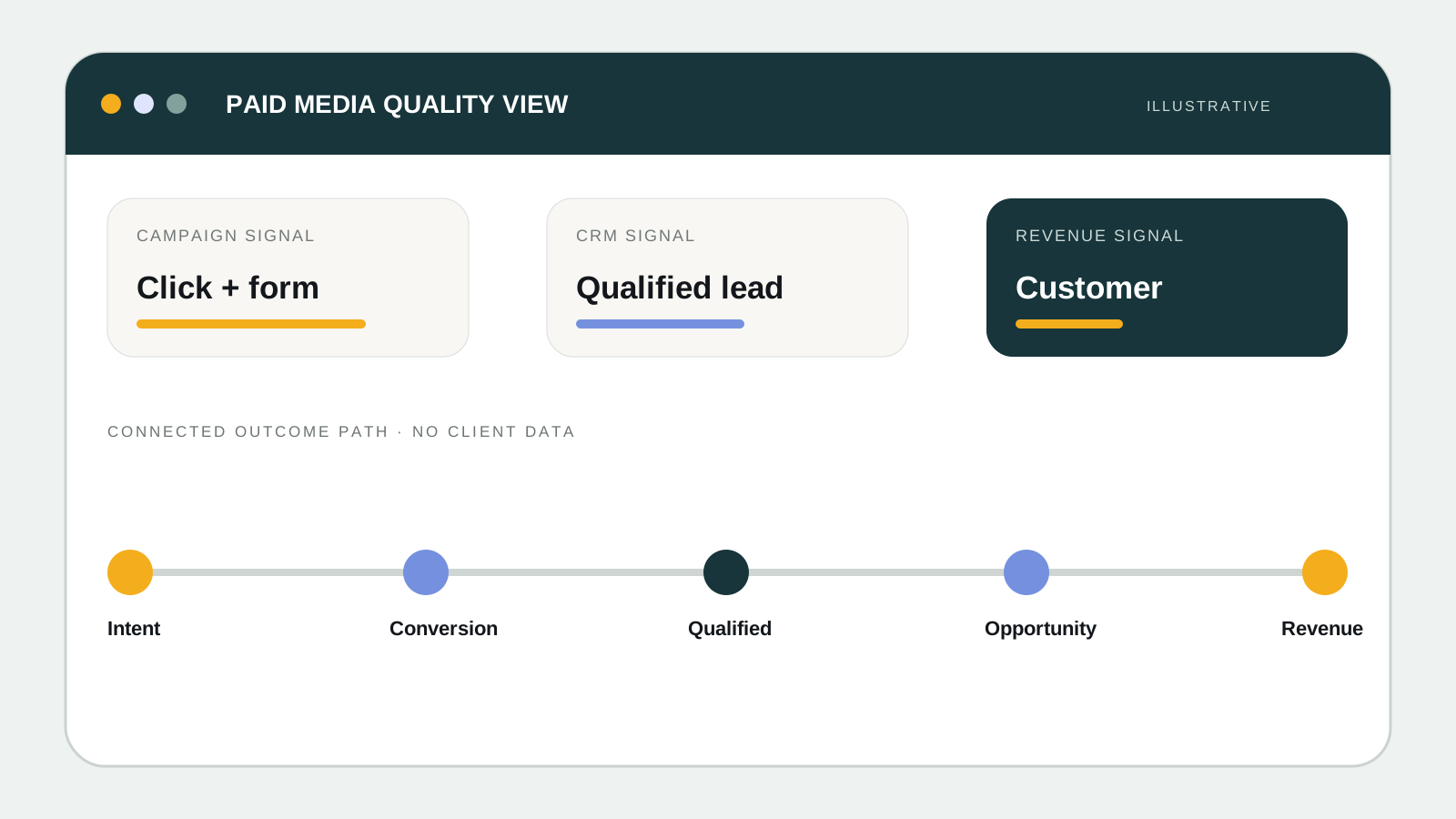
The short answer: Google Ads lead quality usually falls when the campaign is trained on the easiest conversion instead of the most valuable outcome. Fix the full path: search intent, audience exclusions, ad promise, landing-page qualification, CRM feedback and offline conversion data.
A campaign can hit its form-volume target while sales receives poor fits, duplicate inquiries or people with no buying intent. That is not only a media problem. It is a measurement and operating-system problem.
Define quality before changing bids.
Marketing and sales should agree on what counts as a qualified lead and a converted lead. The definition may include service fit, geography, company size, timing, budget, inventory need or another condition that matters to the business.
Create distinct CRM stages or properties for those outcomes. A vague label such as good lead is difficult to audit and impossible to use consistently.
Check what the campaign is actually optimizing.
If every form submission carries the same value, automated bidding learns to find more people likely to submit that form. It does not automatically know which inquiries sales accepts or which opportunities become revenue.
Google recommends separate conversion actions for deeper lead stages such as Qualified Lead and Converted Lead. Those actions allow the account to use downstream business information instead of relying only on the initial website event.
Audit the intent entering the account.
Review search terms, match behavior, location settings, network settings and negative keywords. Separate research intent from buying intent where the economics require it. Ads should make the offer and fit clear enough to discourage the wrong response before the click.
Use the landing page to clarify, not trap.
The page should match the search, explain who the service is for, establish credibility and collect only the information required to choose the next step. Qualifying questions can improve lead context, but a long form can also suppress good demand. Use conditional logic when the answer changes routing or follow-up.
Protect forms from invalid activity.
Use practical controls such as validation, duplicate handling, spam protection and clear location or service requirements. Google recommends measures including reCAPTCHA, qualifying questions and server-side validation for lead-generation campaigns.
Send CRM outcomes back to Google Ads.
Enhanced conversions for leads uses hashed first-party information from website leads to improve the connection between an ad interaction and the later CRM outcome. The implementation should preserve consent, security and data-governance requirements.
Google has also changed parts of its lead-import infrastructure in 2026. Teams using older upload methods should confirm that current integrations and diagnostics are working rather than assuming the data is still flowing.
Review lead quality with sales every week.
Look at accepted leads, rejection reasons, meeting conversion, opportunity creation and revenue by campaign. Sample the actual inquiries. A short conversation about why leads were rejected often reveals more than another round of headline testing.
The order of operations
- Agree on the qualification standard.
- Confirm conversion actions and bidding goals.
- Audit search intent and exclusions.
- Align the ad and landing page.
- Improve validation and form context.
- Connect qualified and converted outcomes from the CRM.
- Use sales feedback to adjust the system.
The best Google Ads account is not the one producing the largest number of forms. It is the one that helps the business create qualified pipeline at an acceptable cost.
Frequently asked questions
Direct answers for the next decision.
Should Google Ads optimize for qualified leads instead of form submissions?
When enough reliable CRM outcome data is available, deeper lead stages can provide a more useful bidding signal. The setup should use clear definitions, distinct conversion actions and regular diagnostics.
Can a landing page improve lead quality?
Yes. A landing page can clarify who the offer is for, match the search intent, add relevant proof and ask a small number of useful qualifying questions. It should not create unnecessary friction for strong prospects.
What are enhanced conversions for leads?
Enhanced conversions for leads is a Google Ads measurement feature that uses hashed first-party lead information to improve the connection between an ad interaction and later offline outcomes recorded in a CRM.
Which metric matters most for lead-generation campaigns?
Use qualified pipeline and customer value when the data is reliable. Supporting metrics include cost per qualified lead, meeting conversion, opportunity conversion and acquisition cost.
Sources and further reading
Put the framework to work
Find the constraint in your growth system.
ResNova can diagnose the current path, set the priorities and build the strategy, execution and infrastructure required to improve it.
Book a Growth Strategy Call ↗